#statusMessage#
Do you want to start the compare now?
#statusMessage#
Do you want to start the compare now?
How Thermography Enhances Manufacturing. Machine stoppages, component overheating, or electrical faults—unplanned downti...
Disturbances in the power grid often go unnoticed until systems shut down or equipment fails. Regular power quality asse...
In this practical checklist you will learn how to calibrate your measuring and test instruments effectively – simply, ef...
Modern oscilloscopes of the MXO Series from Rohde & Schwarz enable precise analysis and optimization of electric drivetr...
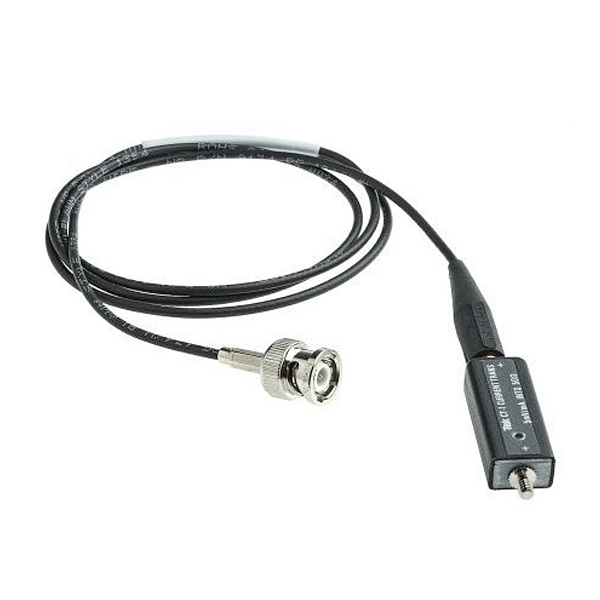
Manufacturer number: CT1
| Accuracy: | ±3 % |
|---|---|
| Article number: | CT2 |
| Electrical safety: | CAT I 175 V RMS |
| Input impedance: | 50 Ω |
| Model: | CT1 |
| Weight (kg): | 0.2 |
| max. Frequency range (MHz): | 1,000 |
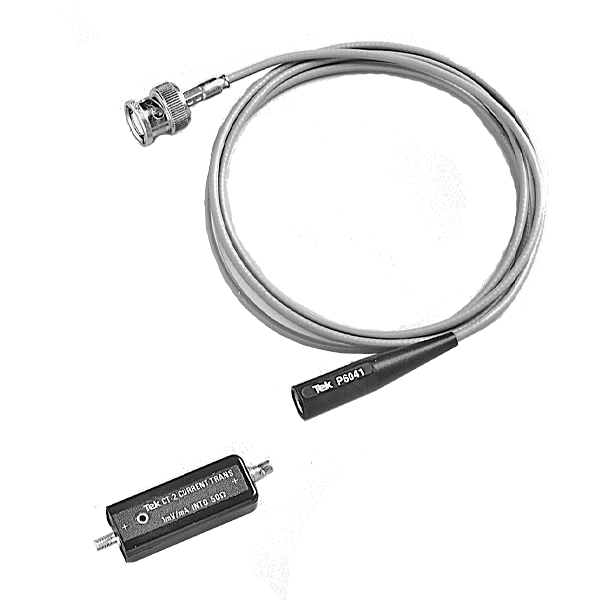
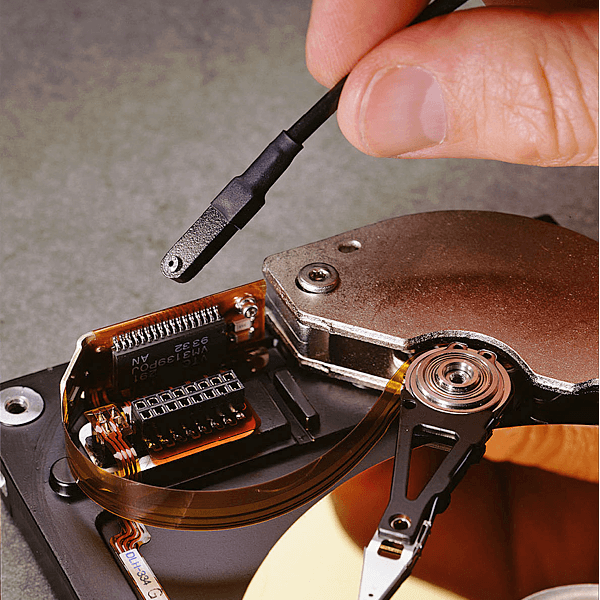
The CT1 current probe in miniature format is intended for permanent or semi-permanent installation in a circuit. The probe consists of a current transformer and a connecting cable. The current transformer has a small hole through which a current-carrying conductor is fed during circuit assembly. The P6041 probe cable included in the scope of delivery establishes the connection between the CT1 current transformer and a BNC oscilloscope input. If the cable is connected to a high-impedance oscilloscope input (1 MΩ), a 50 Ω termination is required. One probe can monitor several current transformers connected in a circuit.
The CT1 current probe is designed for a maximum pulse current of 12 A with an ampere-second product of 1 A × 10-6 seconds (1 ampere-microsecond). It can therefore safely handle a 12 A peak pulse with a maximum width of 0.083 microseconds or lower amplitude pulses for longer pulse widths.
Most true differential voltage amplifiers have a maximum bandwidth of around 100 MHz. The CT1 current probe can perform differential current measurements up to 1 GHz by passing two wires with opposing currents through the same core. The displayed result is the differential current.
Two CT1 current transformers with matching cables of equal signal transit times can be used to measure the signal transit time between the input current and output current of high-frequency components. The two outputs of the current samples are connected to the inputs of a dual-channel real-time sampling oscilloscope. Any sample/cable/scope mismatch can be verified by passing the same signal current through both current samples and measuring the system delay time difference.
Modern oscilloscopes of the MXO Series from Rohde & Schwarz enable precise analysis and optimization of electric drivetr...
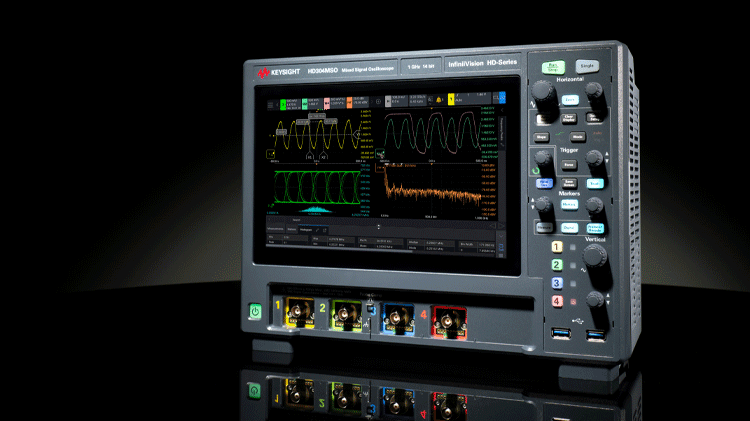
In the new issue of “dataTec unboxed” we present the new InfiniiVision HD3 oscilloscopes from Keysight with 14-bit ADC. ...
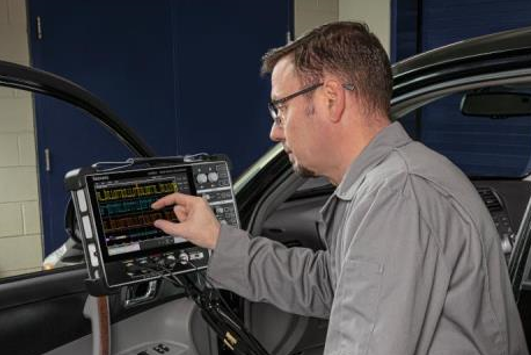
Embedded systems applications are growing rapidly in the automotive industry. Many vehicle designs use CAN, LIN or FlexR...
Engineers primarily use oscilloscopes to debug and characterize various automotive serial buses. These include the contr...
It is widely expected that wide bandgap (WBG) devices—using silicon carbide (SiC) and gallium nitride (GaN) transistors—...
Navigating through the range of available specifications, options and capabilities can be challenging. There are a lot o...
As data rates continue to increase in today’s state-of-the-art high-speed digital designs, timing budgets are decreasing...
Current probes extend the application abilities of oscilloscopes beyond voltage measurement. Basically, current clamps m...
The market offers a wide choice of oscilloscopes for sale. This makes it difficult to decide which oscilloscope to buy a...
Your oscilloscope trigger determines the precise moment in time your instrument captures critical events of interest. Tr...
Oscilloscope users consistently rate bandwidth, sample rate and memory depth as the three most important specifications....
Getting EMI emissions under control is one of those tasks that R&D engineers do not enjoy doing . EMI must often be ...